Finally finding some time to update you guys and there’s a lot happening here!
Cape Town has been treating me really well so far. It is an absolutely beautiful place and it’s amazing how many great and interesting people I got to meet in this short time. There are already loads of shootings and projects lined up that want to be done in the next weeks and months and I almost don’t know where to start.
Besides all the commercial work I’m also looking into the documentation and illustration of some social projects in townships. And talking about townships there’s a little story about a sports event that I want share with you.
A friend and I went to a Red Bull Skate & Bike contest yesterday which was surprisingly moving and made me very humble. It wasn’t in the coolest downtown skate location as you would think but in small skate park in a township almost 40min outside of Cape Town.
First I wasn’t even sure if it is a good idea to bring my camera at all as safety is always a big issue. I can tell you I would have regreted it badly if I hadn’t brought. Yes, there have been quite a few good skaters and bikers in the competition but that wasn’t what caught me – it was the kids from the township that were watching them. You could literally see the fascination in their eyes and once the run was over they conquered the field and tried their own little tricks, fell, got up, tried again. It was so great to see how the sport makes them dream, gives them a goal to go for and (at least for a moment) lets them forget all the problems and chaos around them. Good Red Bull still focuses on the small things too and not just on breaking the sound barrier.
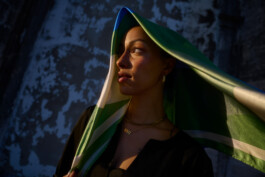
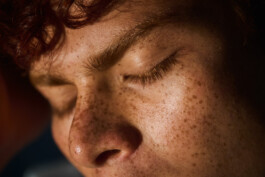
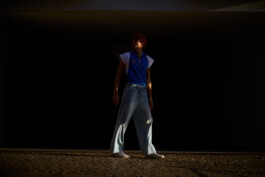
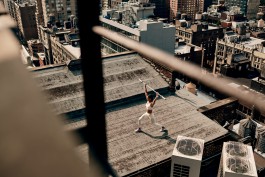
Here are some frames from the competition. Enjoy and drop by again soon for more Cape Town updates!
Many of us have one, many of us use it all the time for the most various things and many of us go crazy when the fruit logo company from California is about to announce a new version. Exactly. The iPhone. 100 points!
How hip, revolutionary, magical, life changing, irreplaceable, thin, long (or should I say ‘looooong’), fast, light, >fill in any positive word you can think of here< it is has been said a billion times on a gazillion blogs – no need to repeat it. What I want to tell you very briefly is how we got the idea for the iPortrait series and how we realized it.
When something is talked about as much as the iPhone you start to think about what other function it has that Good Old Steve maybe didn’t think of. For many of us the iPhone becomes more and more a camera with a telephone function (at least for me it does) and from version to version the screen becomes more and more powerful. One day I sat together with a friend and we talked about the use of smartphones and innovations in the industry and suddenly these two facts linked together and the idea to turn the camera into a light source by lighting a series of portraits with the screens of a few iPhones was born.
Well, a few iPhones. That was probably the hardest part of the entire project. I made the experience that when you take away a smartphone from a friend you either risk losing him or you give his life a totally new dimension. Gladly I didn’t lose any and after making quite a few phone calls I finally found nine generous people who were so cool to borrow me their phone for a day.
To set up each phone safely we used a Manfrotto Clamp and mounted that on a Gobo head which was attached to a Gobo arm. That was again attached to another Gobo head which was mounted on a light stand. Take that times 9 and you have pretty freaky and futuristic looking set.
The whole shooting was a real experiment for all of us as we didn’t have the chance to do much testing in advance. That’s why it was really impressive to see with every shot how you can modify the light by using a bigger number of phones to create a softbox-kinda-light and a single phone to create kicker light as you would get it with a grid spot.
All images were shot with a Nikon D4 and a Nikkor 85mm – f/1.4 lens.
You can find the whole series here and make sure you check out the Making Of.
A couple of weeks ago while the Double Gravity video went crazy on the net (still wonder how that happened!) Nikon send me a mail if they could make a small interview and ask me a few questions about the Double Gravity series. It is absolutely crazy to see something go viral when you haven’t done more than uploaded it and posted it on Facebook. When all this is topped with a mail like that one, well, what else can you ask for.
Here’s the interview from the I AM NIKON Blog:
The man behind the magic – Q&A with Florian Bison
Some of our fans may remember Florian Bison’s stunning “Double Gravity” video that we featured on the I AM Nikon Facebook page in June. We met the man behind the magic and asked him the questions we know many of you were thinking at the time.
Q. How did you get into photography?
The truth is, I was probably seen as a bit of a late starter – I didn’t really get into photography until I was 25. I lived in Malaysia and was lucky enough to get a good deal on my first D-SLR camera. It was a Nikon D90 and its ISO was set to 1600 for the first two months. You don’t need a degree in photography to see that I didn’t have a clue what I was doing.
It took two more years and a trip to South America (ISO settings were adjusted by then) to realise that my passion for photography outweighed everything else. I decided to chuck my plans for a Business Masters and trade an office desk for a camera.
Since November 2010 I’m been living in Hamburg, Germany doing what I would’ve been doing a lot earlier if I got this camera when I was 7! Now, I’m fortunate to take pictures for a living and I love it!
Q. In your personal blog post on Double Gravity, you mention that you sometimes get a nagging feeling that something is on your mind, which then becomes a great idea for a photo shoot. How often does this feeling occur?
I wish I could say twice a day but I’m still working on that regularity. I think the more time and freedom I have for own projects the more I have ideas that have or can develop a potential. Some of them are serious portfolio ideas and some are more experimental and maybe run under the title “project”. I think Double Gravity is one of these.
Q. If a member of our Nikon community were to attempt a similar shoot, what preparations would they need to make?
I approached this shoot with four considerations that I try to make consistent in every shoot:
LOCATION:
The point that requires the most attention is the location scouting. If you are on someone’s property – you need permission to shoot there. For Double Gravity we needed permission for one of the locations – the ladies at the front desk were surprisingly cool with us dumping four broken mirrors off the wall in front of their office building. So my advice would be to just ask, the worse you can get is a NO.
It’s also worth checking to see if there are other buildings, signs, etc. casting shadows on your location. Does this have an impact on the illusion? Have a spare location in case you need to move!
LIGHT:
First of all check if the flashes that you want to use are powerful enough for the f-stop you plan to use.
Know your framing and know where and how you want to place the flashes. If you want a typical 45° light from overhead left AFTER you rotate the photo you will need a platform or a very high light stand to position your flash.
SUBJECT:
Be sure that the model or the athlete you are working with is able to do the moves and poses you need them to perform. We had to find a new pose on the shoot because my ability to express things like a Double Cork Screw is very limited!
PROPS:
If you have something flying through the picture you should make a test shot with your lighting to see how it behaves in motion. The shot with the food colouring, for example, would have looked really washy if we hadn’t tested it before and added a dash of milk for the shooting.
Q. How many attempts were made to capture each photo?
We needed three attempts for the mirror-glass photo as it was the first shot and we had to figure out the timing. For the other two we only had one try each. Around 60 Christmas balls didn’t really leave us room for a second try and after the “paint” shot the floor was wet (and so was our athlete) which would have taken the double gravity illusion out of the image on a second try.
Q. Now that you have had some time away from the shoot, what would you have done differently or would you like to add to what you have already done?
Every now and then I pass locations and I think that they would have worked better for the Double Gravity series. I think there will always be ‘what ifs’ – they shouldn’t affect a past shoot but be input for the next one. That’s why I’m really happy with result and I’ll just keep the locations in mind for future projects.
Q. What was your approach to creating such unique photography?
The approach was to capture Parkour and Freerunning in a new way and then I kind of met the mind-bending part half way. What really worked for me was thinking in new (the most unrealistic) perspectives and getting as much input as possible about the sport itself.
It’s been a little quite here since I have been pretty busy the last weeks. I am just finishing the Making Of Video for a project we realized a few weeks ago and in the meantime I just wanted to drop in a quick post on the something that I stumbled on this morning.
Annie Leibosvitz is one of the most acknowlegded photographers of our time. She has been working as the main photographer for the Rolling Stone Magazin for 8 years and receives almost as much fame as her subjects. There are stories being told about how she works and behaves behind the camera but little is known about how it is to work with her when she becomes the subject to photograph.
Abe Frajndlich photographed her for Allgemeine and he has a pretty interesting story to share about who Annie Leibovitz is in front of a camera.
Read the whole story:
- – - – - – - –
Annie Leibovitz jumped into the role of professional photographer as a kid in her second year at the San Francisco Art Institute. She was friends with Jan Wenner who was starting Rolling Stone, and he said, “How’d you like to take some pictures? We’ve got something set up with John Lennon in New York. Come with me.” Her portrait of John Lennon was on the first issue of Rolling Stone, and she was off and running.
You can’t avoid coming to terms with Annie. She’s a powerhouse, but she wasn’t easy to work with, and I’ve heard endless tales about her mistreatment of her assistants.
When I took these pictures, Annie was certainly not easy. We had called her studio to arrange a session, and she agreed to it. I was coming back from London and our appointment was a few hours after I got back. I had just landed when I got a call from her studio saying, “Can you come an hour earlier?”
My response was, “You know, I’ve been on a plane since dawn in London. I really need to go home and take a shower, just in courtesy to Ms. Leibovitz.” They said, “No, she needs to see you now.” But I went home anyway and arrived at her studio at the time that w’d arranged—not an hour earlier. She wasn’t pleased.
She knew my work because she had worked for the Allgemeine before I did and they were sending her weekly copies. Her first comment was, “I’m not going to do any of your crazy stuff for you.” I said, “Hey, that’s up to you. We’re supposed to do a story together. If you don’t want to do any stuff at all for me, that’s okay too.”
“What do you want from me?”
“Annie, you’re in the same business I’m in. I want from you exactly what you want from every one of your subjects—endless time, endless cooperation, and let’s make it fun. Because the magazine is doing a cover story about you. They’re giving you full space, and as you know, it’s one of the best magazines in the world. But if you don’t want to play the game—I’m out the door.”
“Okay,” she says. “I get it. Meet me tomorrow morning at my apartment, and you can shoot whatever you want. You’ll work around my schedule, and we’ll do this.”
I was a bit jet-lagged, but I arrived the next morning at her apartment at 7:00 am. The doorman told me that she wasn’t there. I waited for a bit more than an hour, and she finally arrived in a limousine, because her girlfriend Susan Sontag lived down in the Village and Annie’s apartment was at 107th and 5th Avenue. She showed me through her apartment, and it looked like some decorator had made up the place and nobody really lived there. “I’m not really interested in shooting here,” I told her. But the day before, I had gotten a tour of the studio, and it was far more interesting. I suggested we do some shooing on the roof of her studio building as the light was coming up.
She agreed. My two assistants and I started setting up lights and taking test shots at 4:30 in the morning. When she arrived an hour or so later she was in the foulest mood imaginable. We did a few Polaroids, and she wasn’t being cooperative, and at some point I turned to her and said, “Annie, I can’t do this without you.”
At that point she suddenly relaxed a bit and began to work with me. This was on a Friday, and we had agreed to two more days of shooting. On Saturday we agreed to meet at her place in Sagaponack out in the Hamptons where she and Susan had a house. We agreed to meet at 7:00. So I got up at 3:30 in the morning, met up with my two assistants, and drove out to her house. No Annie. At 8:00 there was no Annie. Finally she rolled up in her little sports car and apologized for being late. “Sorry, I was stopped by the cops. I was speeding.” But from that point on everything went well. We worked on the beach, we worked in the backyard of the house, and we went to lunch. She couldn’t have been more charming.
She was about to go to London to shoot Mick Jagger. But she agreed to give me one more day when she returned. I told her that for the last session I wanted to get a photograph that was taken from the vantage point of one of her subjects. “I know you photograph lots of celebritites. I want to photograph behind one of those people, set up my lights, and be looking past that person’s cheek or face at you, Annie, shooting them, surrounded by your four or five assistants.”
She replied: “I’m shooting Laurie Anderson in about eight or nine days. If it’s okay with Laurie, you can come in with your assistants.”
When she was in London, her studio called and said, “Laurie’s okayed it, so everything’s a go.” But then, the day before the shoot, while I was in the middle of a session with the violinist Midori, I got a call saying that, “Annie has decided that you can’t shoot with anything but a hand-held camera. No lights.”
In the meantime I had hired a stylist and created an entire body suit for Annie to wear, made up of her iconic images cut from one of her books. It was really Rococo and gorgeously done. The stylist worked on it for the whole period when Annie was shooting Mick in London.
When I arrived at the studio for the shoot, I showed her this thing and she resonded, “What, are you crazy? I’m not going to put that thing on. By the way, what do you need two assistants for? You’re only going to work with a hand-held camera. Get that second assistant out of my studio.”
It wasn’t exactly “Hello. How are you? Nice to see you again.” So I sent Franco away and worked for 45 minutes with Andy, taking shots of Laurie, Annie, and Annie’s assistants with my Widelux and the Leica. Once I was done, I said goodbye to her studio manager at the desk and left without distrubing her.
But by the time I got back to my studio, there were two phone messages on the machine, one from her assistant asking me to call Annie immediately, and one from Annie saying, “How dare you walk out on me without saying goodbye?”
I called the studio, and they told me that I couldn’t speak to Annie just then, but a few minutes later she called me back. “Annie,” I said. “Give me a fucking break. Two days ago I was in the middle of a shoot, and you called and changed the whole game plan. Laurie had okayed this. You threw out my assistant. What do you mean, I walked out on you? I said goodbye to your people behind the desk, but I wasn’t going to stop you in the middle of shooting.”
At some point she backed off. “Sorry, I’m a bit schizoid,” she said. “Well, at some point let’s go out for a drink or something.” “Okay,” she said, but I never called her for a drink, and she never called me, either.
In the end, the Allgemeine ran a big story with her picture on the cover and six pages inside. But she was hard work. I also took some pictures of myself in that suit she wouldn’t wear which are quite funny. My feeling about Annie is that she’s a man who just happens to be in a woman’s body. She’s about six feet two and she’s got hands that make mind look like baby hands. She’s got this macho approach to everything. But she is an amazing photographer, and the image of Yoko and the naked John Lennon wrapped around her dressed body is one of the truly remarkable portraits of the 20th century.—Abe Frajndlich
The environment in photography has changed fundamentally in the past years and it keeps on changing in the moment I’m writing this. Starting with the costs of gear ending with the social value that is given to the work of a photographer, nothing is like it used to be. To find your vision, your style and your position in the industry is more important than it has ever been before. Check out these nine videos of photographers (interviewed by PhotoQ) who talk about the future of photography and how they are trying to make their way through it.
In advertising it’s more common than ever before to use different types of art and artists to create emotions and promote a certain product. May it be street art or a whole bunch of dancing or singing people that suddenly gather for a flash mob.
I don’t know why I’m getting so nuts about this commercial nor am I sure if this is a great way to promote a car (how do you promote a Chevrolet anyway!?) but they took the street art painting to a whole new level by mixing human creativity and robot technology. Who in the world would have the money to do something like that if not a car company!? (Thanks to the US governemnt for making this possible!)
It’s street art legend Jeff Soto, a wall, a robot, a car and lots of paint. You have to watch this!
Sometimes something is on your mind for weeks and months and it makes you restless until you realize it. Ever had that? I did with Double Gravity.
A few month ago we eventually put the idea into pixels and shot some video footage for a Making Of video. BTW, if you want to ruin your favorite track I highly recommend using it for a video.
For those who already checked out the Making of pictures this could be some nice addition. For those who haven’t but always wondered how to dump stuff off walls and frame it, here’s the answer.
(Switch resolution to HD for fullscreen view.)
Last year in summer I shot a portrait of Uwe Behrens who is one the founders of the hip-cult beach cafe Buhne 16 on Sylt. I’ve spent many awesome summers at this magical place and I have been one damn lucky guy that I got the chance to meet and to know Uwe and his brothers. In Germany they are also known as the fathers of surfing as they were the first ones to stand on a surfboard when they were still working as life guards before they opened the cafe together. He is still telling the story when some 200 people were standing on the beach watching them “surf” for the first time when they had their first real surfboards shipped from France to Sylt. That man is a living book.
A few years ago their experiences and stories were finally put together in the movie “Die Väter des Wellenreitens”. You can find the German trailer here.
As the cafe is located right by the sea in the middle of nowhere he, his two brothers and a small number of well selected members of the “fish gang” are driving out to fish everyday once the season for mackarels has started. Since the first day, which lays probably some 30 years back, he writes into a little book to keep track of every single factor just as wind directions, wind speed, weather conditions, fish caught, men on board, you name it. When I thought about the portrait and how to photograph him it became clear straight away that his book would be in it.
As I set the light up and shot a few test frames I saw that the ambient light did not have enough power to rim light his right part of the face. I didn’t have a reflector or anything that would’ve helped with me so we used a body board that happened to be in the room. Et voila! It worked perfectly.
I used a SB-900 as commander on the camera to trigger the other two SB-900, one in the softbox as group A and one behind the chair as group B. The flash behind the chair is firing against the lockers to soften the change from the light grey tone of his pullover to the darker grey of the lockers.
Uwe’s wife told me that he usually hates himself on pictures but that he loves that one. Maybe that gets me into the fish gang one day. I’ll let you know.
When you browse the web you often come across rules that “lead” you the way to get your creative business running, no matter if you’re a graphic designer, musician, photographer or even any other kind of company. The most useful set of rules that I found til now is this one from Seattle based photographer Chase Jarvis. He breaks it down to 13 rules and every single one of them couldn’t be more clear. Helpful stuff, have a look.
I dont’t know if I ever really thought about sticking to a rule when I had to make a decision, I believe it was and still is more like following a gut instinct that guides me through all these life-changing crossroads (how poetic!). But still, looking back there are three things that I stick to all the time:
1. SHOOT
In other words “DO” whatever it is that you do. Talking about photography there is nothing more important than getting your hands on a camera. I realized that when I tried to get started as an assistant. At that time I thought that this would make me a photographer – assisting. It defenitely helps and you can leran a lot about light, gear, people (on the set and everyone alse involved in the production process), engage your network, etc. but you will never know how it is when you are standing behind the camera and the pressure is on you. So get yourself a camera, start shooting, play around with the settings, the light, keep the shutter running. Don’t worry about the gear. In the beginning I told myself all the time that I need this lens, that camera and that light modifier to capture the image that I had in mind. Bullshit, I just needed an apology. You don’t need a good photographers gear to take good pictures, you need his eyes.
2. SHARE
Let’s say you followed rule one and you review the pictures you’ve taken everytime you start working on another project to figure out what to do better the next time you pick up the camera. Good step. I do it all the time just to get frustrated and decide that I suck. I have no clue why that happens but it keeps me moving.
What I think is even more important is showing your work to others and ask them what they think, like, dislike about it. If the only pair of eyes watching and criticizing your work are yours, the limit of your improvement is your horizon, your point of view and your knowledge about photography (or cooking, sewing, designing, blablabla..). If you show your portfolio to people with totally different (creative or less creative) backgrounds you will get totally new input and your learning curve and the quality of your work can get a big boost.
What I wanna say is that reviewing and getting your work reviewed is really important and a crucial step to improve your work.
3. SOCIALIZE
I bet there are nicer words than “socialize” but it goes along pretty well with the other two. You could replace it with: Networking, Meeting people, Tell your story, Shout it out, Show off, Post it all on FB/twitter…,… ,…
There are thousands of doors out there which could give you the kick you need to get to the next level. All you need to do is convince the doorman to open it. So tell everyone what you’re up to, what your plans are, which projects you’re working on. They might have the contact you were looking for.
So Shoot, Sahre, Socialize it is. Since this sounds so compact and smooth and I was desperately looking for a name for my blog. BINGO, that’s its name.
Again, this is how it worked and still works for me. If you discovered that it could work for you too, cool. If not, don’t get lost in other peoples smartass advices and rules. Make your own ones.
- Yea, I know what you think now.. “Wow, an integrated photography blog, what a breathtaking innovation.” It’s not. I won’t reinvent photography nor do I think that my future posts describe the path to success. The reason why I blog is that there is a bunch of photogs out there who share their knowledge and experience on the web and this is what really helped me find my way out of the jungle of photography when I got started.
I told myself that if I ever feel that there is something that I think is worth sharing, I would do so. So here it is. Feel free to sign up via RSS on the bottom or drop by every now and then. Hope you enjoy it!